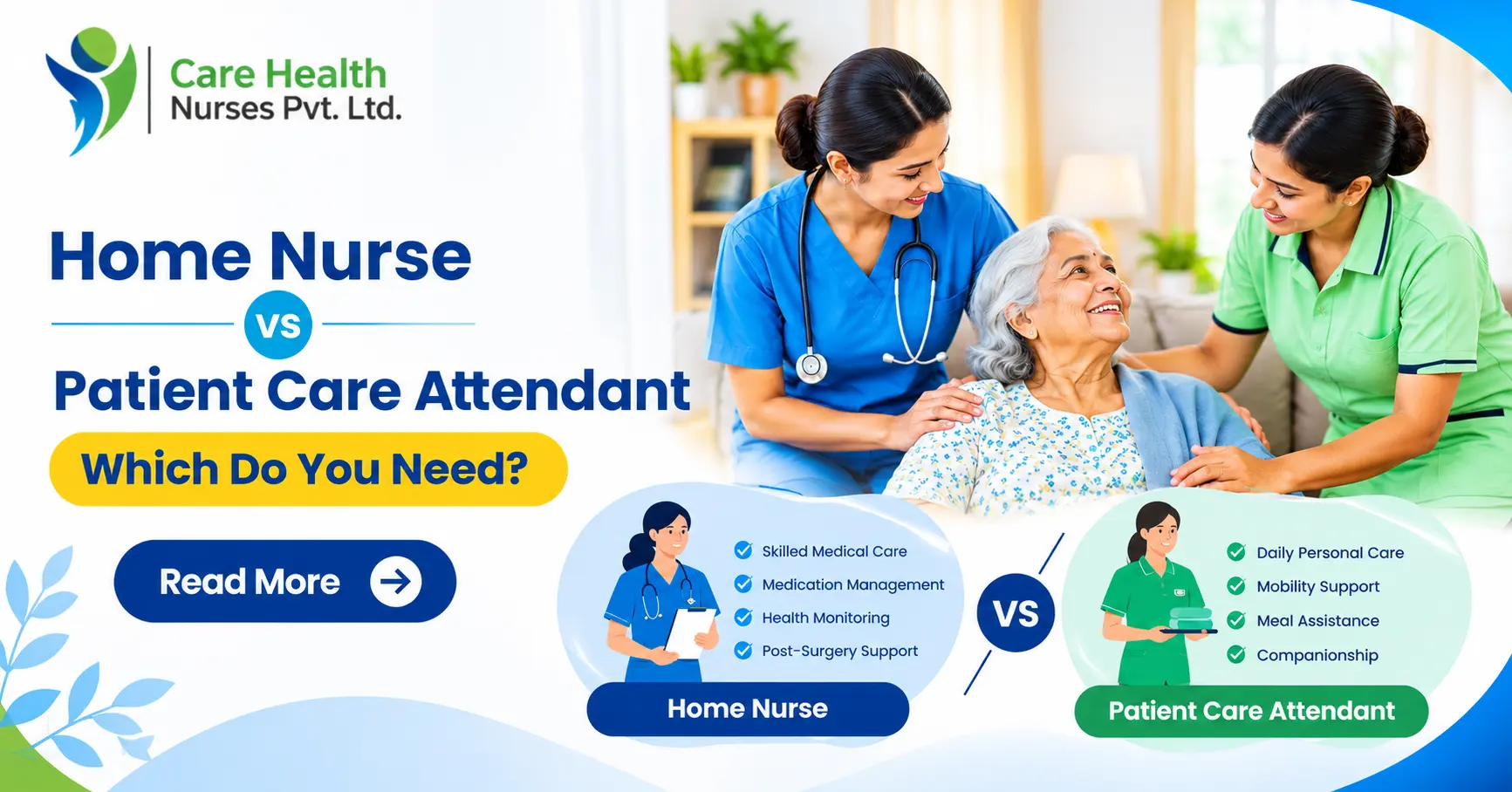
Home Nurse vs Patient Care Attendant: Which Do You Need?
Your father came home from the hospital yesterday. The discharge papers list six medicines, a follow-up appointment, and a note that he “requires assistance at home.” You have roughly a week to arrange care in Lucknow, and every search result offers “trained caregivers for your family.”
One decision will shape how that week goes: do you need a home nurse or a patient care attendant? Many families assume the two roles are the same, or that a nurse is always the better choice. Neither assumption holds. The costliest mistake is not usually hiring the wrong person. It is hiring the right title for the wrong job, which leaves a patient either under-treated or paying for skills that go unused.
This guide explains what each role does, where the market leaves families confused, and how to make the choice with confidence. If you are looking for a home healthcare services in Lucknow provider, read this before you sign anything.
Key Takeaways
- A home nurse provides clinical care: medicines as prescribed, wound dressing, vital-sign monitoring, catheter and drain care, and reporting changes to the doctor.
- A patient care attendant supports daily living: bathing, feeding, moving around, toileting, and companionship for patients whose medical condition is stable.
- Many families need both, a nurse for clinical tasks and an attendant for everyday support.
- A full-time nurse at home in Lucknow suits complex or unstable conditions, but it requires planning for shifts, backup cover, and supervision.
- If you need a male nurse for home care in Lucknow, mention it at the start, particularly for personal care.
- Always verify credentials, request a written care plan, and confirm how replacements are arranged.
What a Home Nurse Actually Does
A home nurse is a trained professional who delivers clinical care in the patient’s own home. The job calls for medical knowledge and sound judgment. Core duties include administering medications precisely as prescribed, dressing wounds and tracking healing, looking after catheters, drains, and feeding tubes where ordered, and checking blood pressure, pulse, temperature, blood sugar, and oxygen levels.
A nurse’s observation skills are often the most valuable part of the job. An experienced nurse may notice that a patient is eating less, sleeping more, or breathing a little faster than the day before, and raise the alarm before a small problem turns into an emergency. That early attention frequently keeps families out of emergency rooms.
Nurses also manage coordination. They keep a medication chart, follow the discharge plan, stay in touch with the treating doctor, and explain to family members what is happening and why.
Can a patient care attendant give injections or manage IV lines?
No. Injections, IV management, and most clinical procedures fall within nursing scope. An attendant should only carry out tasks that the agency and the doctor have approved in writing.
What a Patient Care Attendant Actually Does
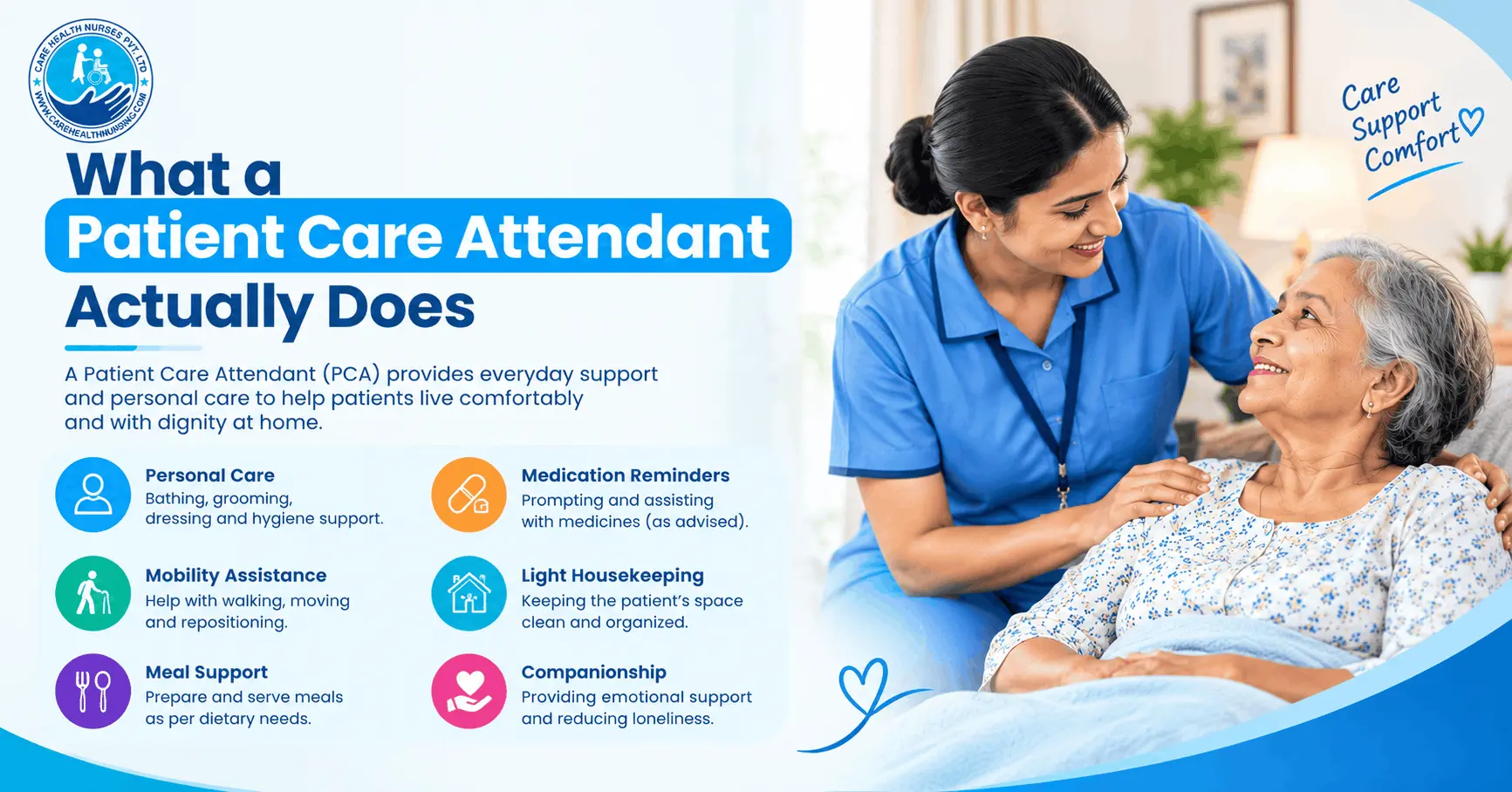
A patient care attendant concentrates on the everyday needs that keep a person clean, comfortable, and safe. The work is hands-on and personal: helping with bathing, dressing, grooming, and toileting, supporting walking and transfers from bed to chair, changing position regularly to prevent bedsores, preparing meals according to dietary instructions, and offering companionship, which many families underestimate.
An attendant can make a real difference for an elderly parent who is medically stable but cannot manage alone. Such a person mainly needs a dependable, patient helper who arrives every day and does the work carefully.
The attendant’s boundaries are just as important. An attendant should observe and report, not diagnose or treat. If an attendant notices a new symptom, the right step is to inform the family or the nurse, not to guess at a cause.
Is a home nurse always the more expensive choice?
Per hour, generally yes. However, if a nurse prevents a readmission or catches an infection early, the overall cost of care can be lower than a series of hospital stays.
The Differences That Matter
The roles overlap in some areas, but their boundaries are clear:
Factor Home Nurse Patient Care Attendant Main purpose Clinical treatment and monitoring Support with daily living Medication Gives as prescribed Reminds or helps, as approved Wound and drain care Yes Basic hygiene only, as instructed Injections and IV care Yes No Bathing, feeding, mobility Yes Yes, this is the core role Best suited for Post-surgery care, complex or unstable conditions Stable patients who need daily help Typical cost Higher Lower
Nurses and attendants do not compete with each other. They fill different needs. Choosing the wrong one either wastes money or leaves a gap in care.
The Market Gap Most Families in Lucknow Never See
Search for home care in Lucknow and you will notice a pattern. Most listings use “nurse,” “caregiver,” and “attendant” as if they meant the same thing. Prices are often quoted as a single daily or monthly figure with no breakdown of what it covers. Families are left wondering whether the person arriving can give an injection or only help their father out of bed.
This confusion is expensive in both directions. Some families pay nursing rates for attendant-level work. Others hire an attendant for a patient who needs clinical oversight, and the problem only becomes clear after a complication. Both errors trace back to the same cause: no one explained the difference before the decision had to be made under pressure.
A second gap is practical. Many families want a male caregiver for a male relative, especially for bathing, yet few agencies state this openly. Families looking for a home nurse near Lucknow also rarely get clear answers about how fast care can begin, how replacements are handled, or what happens on public holidays. These details matter and deserve straight answers.
Which One Do You Need? A Practical Guide
Begin with the patient’s condition, not the job title.
Does the patient need treatment or support? If the doctor has prescribed medications, dressings, injections, catheter care, or monitoring, you need a nurse. If the main requirement is help with daily living, an attendant is probably the right choice.
How stable is the condition? A patient just home from surgery, recovering from a fresh infection, or living with a condition that changes from day to day needs a nurse’s attention. A stable elderly person with predictable needs usually does not.
How many hours of care are required? A few hours a day may be enough for medication and checks. Full-time coverage becomes necessary when the patient cannot safely be left alone, which is common with advanced dementia, severe loss of mobility, or several conditions that need frequent attention.
Who is the patient, and what are their preferences? Comfort matters most in personal care. Many male patients feel more at ease with a male caregiver for bathing and toileting, so state this preference clearly from the start.
Consider a man in his sixties coming home after a hip replacement. He needs medicines on schedule, wound checks, and help walking for the first few weeks. A home nurse for daily visits, combined with an attendant for mobility support during the other hours, is usually the right mix.
Now consider an elderly woman whose blood pressure and diabetes are under control, who is unsteady on her feet but mentally sharp. She needs regular meals, help with bathing, and someone close by in case she falls. A patient care attendant with periodic nursing checks often meets her needs well and at a lower cost.
Do I need round-the-clock care?
Not always. Many patients do well with a nurse during the day and an attendant overnight. Round-the-clock care is usually needed for severe dependence, dementia with a risk of wandering, or unstable medical conditions.
Full-Time Nurse at Home in Lucknow: What to Plan For?
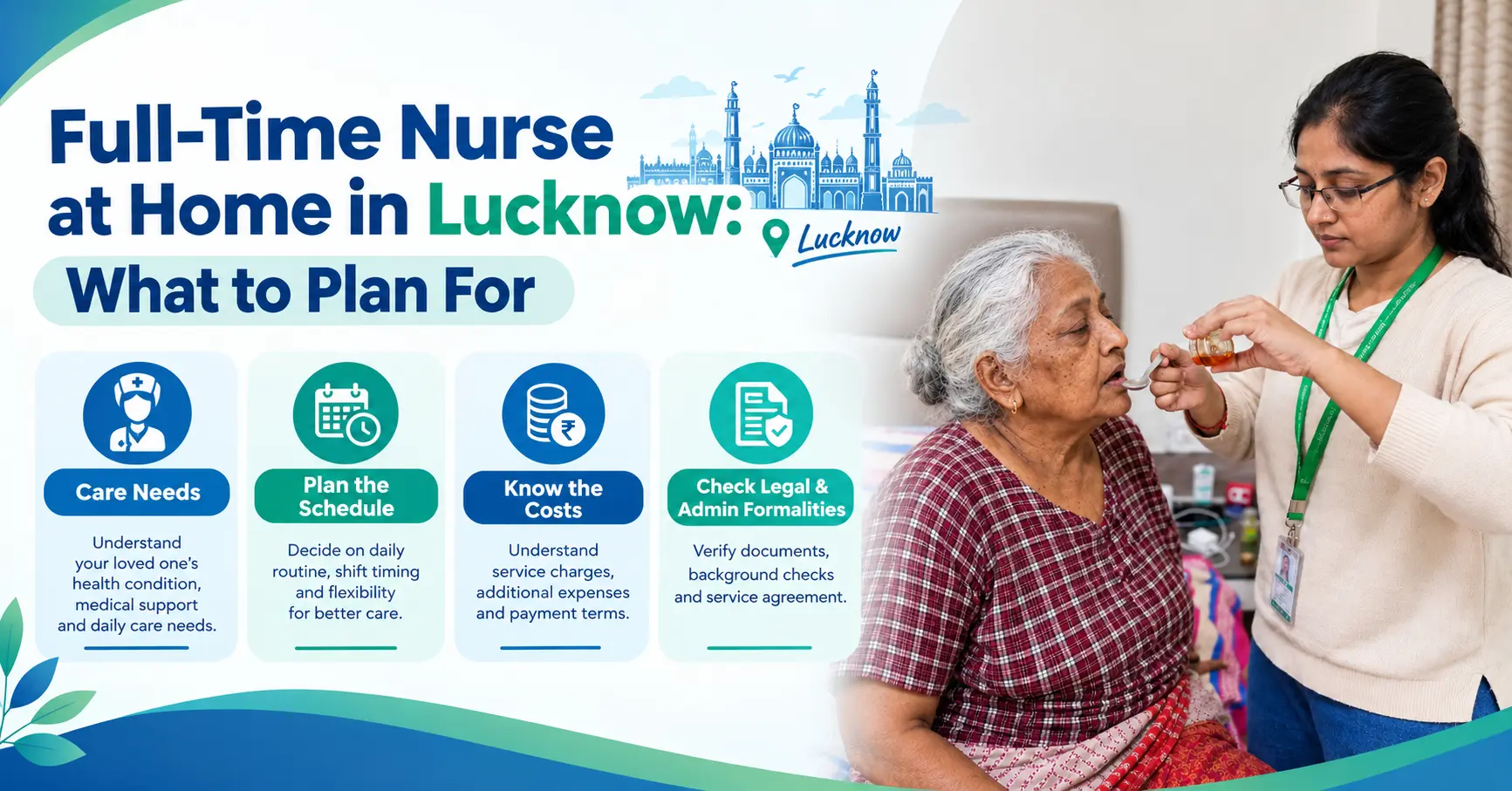
Families who need continuous clinical care often look for a full-time nurse at home in Lucknow. This is a serious commitment, and it works best with advance planning.
No single nurse can work twenty-four hours a day. A full-time arrangement runs on shifts, so ask how those shifts are organized, how handovers are recorded, and who covers when the regular nurse is on leave or unwell. Without a clear backup plan, families tend to discover gaps at the worst possible moment.
Supervision matters as well. Ask for a named coordinator you can contact with concerns, and find out how the agency responds when you are dissatisfied. A dependable provider welcomes these questions, and the way they answer tells you more than any brochure can.
Finally, agree on documentation from the first day. A daily record of medicines given, vital signs, food and fluid intake, and unusual events protects the patient, helps the doctor, and shows you clearly how recovery is progressing.
Why Care Health Nurses Is the Best Choice
Choosing a home care provider is ultimately a question of trust. You are letting someone into a space where a family member is vulnerable, and you need to feel sure that care will be safe, consistent, and respectful. Care Health Nurses works to meet that standard.
The first element is matching the right professional to the right need. Care Health Nurses does not push one generic package on every family. The team evaluates the patient’s condition and recommends a nurse, an attendant, or a combination, so you pay only for care that is genuinely required. Honest matching is the basis of good home care, and it is where many providers fall short.
The second element is consistency. Families value continuity: a familiar face, a steady routine, and a clear picture of what is going on. Structured staffing and handovers support that continuity.
The third element is dignity. Personal care is intimate work and should be provided with patience and discretion. Care Health Nurses provides male caregivers for male patients wherever that is preferred.
Why Choose Care Health Nurses
When families compare providers, price usually comes first. That is understandable, but the cheapest option is seldom the best value. Care Health Nurses stands out for reasons that become clear once care begins.
You get clarity from the start. Before service begins, you should know exactly what will be provided, who will provide it, and what it will cost. Clear written scope prevents the surprises that erode trust later.
You get flexibility that fits real life. Whether you need a full-time nurse at home, a few hours of daily support, or a male caregiver for a father recovering at home, the arrangement can change as the patient’s needs change. Recovery rarely follows a straight line, and care should adjust with it.
You get a team behind every caregiver. One person cannot cover every situation, so dependable support includes coordination, supervision, and backup cover.
If you are searching for a home nurse near Lucknow or nursing services near me in Lucknow, the most useful first step is a conversation. Share the diagnosis, current medications, daily routine, and your concerns, then ask for a recommendation. A good provider will tell you honestly whether you need a nurse, an attendant, or both. You can also explore the full range of home nursing services in Lucknow before deciding.
Conclusion
“Home nurse or patient care attendant?” has a straightforward answer once you know what the patient needs. Clinical treatment calls for a nurse. Daily support for a stable person calls for an attendant. Many families need a considered combination of both. The mistake is choosing based on title, price, or a sales pitch instead of on need.
Gather the discharge papers, list the medical tasks, list the daily-living tasks, and match each one to the right role. Then choose a provider that is willing to explain the difference and plan care around the patient. That is how you secure safe, dignified, and cost-effective care at home.
Need Help Choosing the Right Home Care? Contact Care Health Nursing Service for trusted home nursing and patient care support tailored to your loved one’s needs.
Contact us today to find the right care for your family
FAQ’s
1) What is the difference between a home nurse and a patient care attendant?
A home nurse provides clinical care such as medication administration, wound care, and health monitoring. A patient care attendant assists with daily living activities such as bathing, feeding, and mobility.
2) How do I know whether my parent needs a nurse or an attendant?
Review the discharge instructions and ask the treating doctor whether any clinical procedures are required. If the needs are mainly personal or related to mobility and the condition is stable, an attendant is often sufficient. Medical tasks or unstable symptoms call for a nurse.
3) Can I request a male caregiver for my father?
Yes. Many families prefer male caregivers for male patients, particularly for bathing and personal care. Make the request when you first get in touch, and confirm availability before service begins.
4) What should I check before hiring a home care provider in Lucknow?
Verify credentials, request a written care plan, clarify what the price includes, and ask how replacements are handled when a caregiver is absent. Also ask how supervision and complaints are managed.
5) Is full-time home nursing necessary for every patient?
No. Full-time care is needed when the patient cannot be left alone safely or has complex, unstable medical needs. Many patients do well with daytime nursing and overnight attendant support, which is usually more economical.
6) How soon can care start after I call?
Timing depends on the level of care needed and current availability. Contact providers early, especially if discharge is near, so arrangements are in place before the patient comes home.